In recent years, farmland has re-emerged as a strategic asset class—driven not only by inflation hedging and food security concerns, but increasingly by environmental sustainability, water access, and regulatory risk. Nowhere is this more relevant than in South America, a region that combines vast agricultural potential with some of the world’s most sensitive ecosystems.
Yet, beneath the surface of attractive yields and low entry prices, the four principal markets—Uruguay, Paraguay, Argentina, and Brazil—offer fundamentally different propositions when evaluated through the lenses of legal certainty, environmental exposure, water rights, and long-term wealth preservation.
The Environmental Dimension: From Opportunity to Liability
Agriculture today is no longer assessed purely on productivity. Institutional investors, family offices, and even private buyers are increasingly sensitive to ESG risks, particularly those linked to deforestation, biodiversity loss, and water use.
In this regard, Brazil and Paraguay present both opportunity and complexity.
In Brazil, a significant portion of agricultural expansion over the past decades has taken place in or near the Amazon Rainforest and the Cerrado biome. While this has enabled large-scale, highly productive farming, it has also placed landowners under growing international scrutiny. Environmental compliance is strict on paper—requiring legal reserves and preservation areas—but enforcement can vary regionally, and reputational risk has become a real consideration for foreign investors, particularly those with European exposure.
Similarly, Paraguay—especially in the Chaco region—has experienced rapid land conversion. While this creates low-cost entry opportunities, it also raises questions around deforestation, soil sustainability, and future regulatory tightening. Investors entering at scale must consider not only current legality, but also how global environmental pressure could reshape the operating landscape.
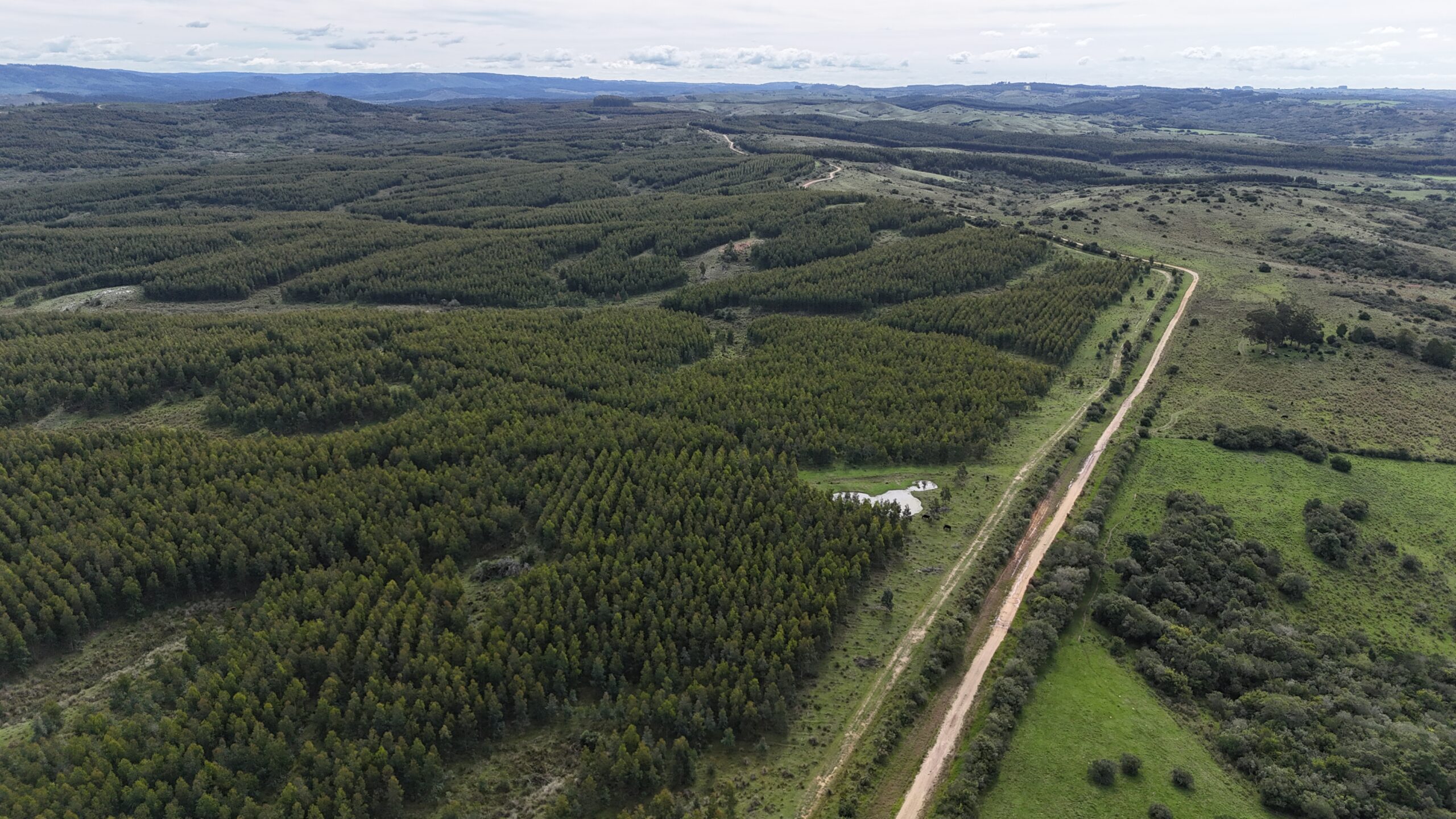
By contrast, Uruguay occupies a unique position. The country has no rainforest exposure and is characterized instead by natural grasslands. Its agricultural model is largely based on pasture systems rather than land clearing, which significantly reduces environmental controversy. Forestry, an important sector, is conducted within a well-regulated framework of designated forestry soils and long-term sustainability criteria.
Over the past decade, native forest in Uruguay has expanded gradually but consistently, increasing by roughly 5–10% to reach about 850,000 hectares today.
This is not the result of large-scale planting, but of natural regeneration under strict legal protection—Uruguay effectively prohibits clearing of native forest, allowing it to slowly recover, particularly along rivers and in hill regions. Reduced grazing pressure and better land management have further supported this trend.
While the growth is modest and uneven across regions, the direction is clear: Uruguay is one of the few agricultural countries where native forest is steadily increasing rather than declining—a reflection of its stable environmental framework and low deforestation risk.
Argentina sits somewhere in between. While the Pampas region is one of the most fertile agricultural zones globally, expansion into northern regions has raised environmental concerns. However, for prime farmland in core areas, ESG risks are generally more limited compared to Brazil and Paraguay.
Water: The Strategic Asset Behind the Asset
If land is the visible asset, water is the invisible one—and often the more critical.
South America benefits from one of the largest freshwater reserves in the world, the Guaraní Aquifer, which underlies large parts of the region. However, access, regulation, and reliability differ significantly between countries.
In Uruguay, water is widely regarded as one of the country’s greatest strategic advantages. Rainfall is well-distributed throughout the year, reducing dependency on irrigation. More importantly, water is considered a public good under a stable legal framework, which ensures predictable access for agricultural use while avoiding the fragmentation or privatization seen in other regions. For investors, this translates into low hydrological risk and high long-term security.
In Brazil, water availability is abundant at a national level, but regional variability is significant. Certain agricultural frontiers depend increasingly on irrigation, raising questions around permitting, infrastructure, and long-term sustainability. Additionally, water rights and environmental licensing can become complex and time-consuming, particularly in frontier regions.
Paraguay also benefits from strong water resources, particularly in the eastern region. However, infrastructure and management practices are less developed, and in the Chaco, water availability can become seasonally constrained, requiring investment in storage and distribution.
Argentina again presents a dual reality. While rainfed agriculture dominates the Pampas, some regions depend on irrigation systems that are vulnerable to regulatory changes or infrastructure limitations. Moreover, macroeconomic instability has historically affected investment in water systems and maintenance.
Legal Security Meets Environmental Stability
Environmental considerations increasingly intersect with legal frameworks. Regulations around land use, water, and conservation are only as reliable as the institutions that enforce them.
Uruguay stands out not only for its clear and transparent property rights, but also for the consistency of its environmental policies. Investors operate within a framework where rules are stable, enforcement is predictable, and compliance aligns with international expectations. This combination is particularly valuable for institutional capital, where reputational risk is as important as financial return.
In Brazil and Paraguay, while laws may be well-defined, practical enforcement and interpretation can vary, adding a layer of operational complexity. Argentina, on the other hand, introduces a different dimension: policy volatility, where regulatory changes—whether environmental, fiscal, or currency-related—can occur rapidly and with limited predictability.
Land Prices and What They Really Reflect
At first glance, Paraguay’s low land prices or Brazil’s large-scale opportunities may seem more attractive. However, pricing in farmland is never purely about productive capacity—it is a reflection of risk, liquidity, legal certainty, and long-term sustainability.
Uruguay’s relatively higher prices are often misunderstood in this context. They reflect not only soil quality, but also:
- a fully transparent market
- strong institutional backing
- environmental stability
- and consistent investor demand
In other words, pricing in Uruguay incorporates a “risk discount” that has already been removed, whereas in other markets, investors are implicitly compensated for taking on additional layers of uncertainty.
Wealth Preservation and Generational Planning
Beyond operational returns, farmland is increasingly used as a tool for wealth preservation across generations.
Uruguay offers a particularly compelling framework in this regard. The absence of inheritance tax, combined with a stable legal system and clear land ownership structures, allows families to plan long-term without the risk of forced asset sales or fiscal erosion. When combined with its fiscal residency regime, this creates a powerful alignment between investment, lifestyle, and succession planning.
Paraguay shares some of these tax advantages, but without the same level of legal certainty. Argentina and Brazil, by contrast, introduce layers of taxation and regulatory complexity that can materially affect intergenerational transfer.
Final Perspective: Stability in an Increasingly Complex World
Farmland investment in South America is not a one-dimensional decision. It is a balance between return, risk, environmental exposure, and long-term security.
- Brazil offers scale and global relevance, but with environmental and regulatory complexity.
- Paraguay provides low-cost entry and potential upside, accompanied by higher structural and ESG risk.
- Argentina delivers exceptional natural productivity, yet remains constrained by macroeconomic and political volatility.
Against this backdrop, Uruguay distinguishes itself not by extremes, but by consistency.
It is a market where:
- environmental risks are limited and well-managed
- water access is secure and predictable
- legal frameworks are stable and transparent
- and long-term wealth can be preserved with confidence
Banking ease, rental payment and repatration.
Uruguay offers one of the most straightforward and investor-friendly financial environments in the region. Opening a bank account is relatively structured but accessible, with a strong presence of international banks and a stable system widely used by foreign investors.
Rental income can be received in local or foreign currency, and importantly, there are no capital controls. Investors are free to transfer rental income, dividends, or sale proceeds abroad with minimal friction under a clear legal framework.
In practice: Uruguay functions almost like an open financial hub within South America.
Paraguay is relatively open and low-cost, but the system is less developed and more bureaucratic. Banking can be slower, and international connectivity is more limited compared to Uruguay.
Rental income can be received and transferred abroad, but investors may face:
- administrative hurdles
- currency volatility
- evolving regulations
In practice: feasible, but requires more structuring and local support.
Argentina remains the most complex and restrictive environment. While recent reforms have slightly eased rules, the country still operates with foreign exchange controls and a history of capital restrictions.
Receiving rental income locally is straightforward, but:
- converting to USD
- transferring funds abroad
can be difficult, time-dependent, and sometimes subject to regulatory changes.
In practice: capital can be repatriated, but often with delays, conditions, or uncertainty.
Brazil sits in the middle: a large, sophisticated banking system, but with more regulation and complexity.
Rental income can be received and repatriated, provided:
- the original investment is properly registered
- transactions follow central bank rules
The system works, but involves compliance, documentation, and tax considerations.
In practice: reliable but bureaucratically heavy.
- Uruguay → Easiest, most predictable, fully open capital flows
- Paraguay → Open but less efficient, some operational friction
- Brazil → Functional but complex and compliance-driven
- Argentina → Improving, but still constrained by capital controls
From a farmland investor perspective, this translates into a very practical conclusion:
The ability to collect rent in hard currency and freely move capital is not a given in South America— and this is precisely where Uruguay clearly differentiates itself.
For investors increasingly focused not only on returns, but on resilience, reputation, and generational continuity, Uruguay represents a uniquely balanced proposition in the South American farmland landscape.